Facebook
 X
X
 Pinterest
 Copy Link
Condo HVAC: Who Maintains It and Who Pays When It Breaks?
During a condo showing, buyers often test the thermostat and feel air coming from a vent. If the suite heats or cools, the system may seem fine.
The more complicated question is what happens after closing if the fan coil, heat pump, thermostat, condensate line or another component needs service or replacement.
In an Ontario condominium, the answer is not always “the corporation pays.” Responsibility depends on what the component is, how the building is designed and what the condominium’s declaration, by-laws, rules and standard-unit definition say.
Start by Identifying the System
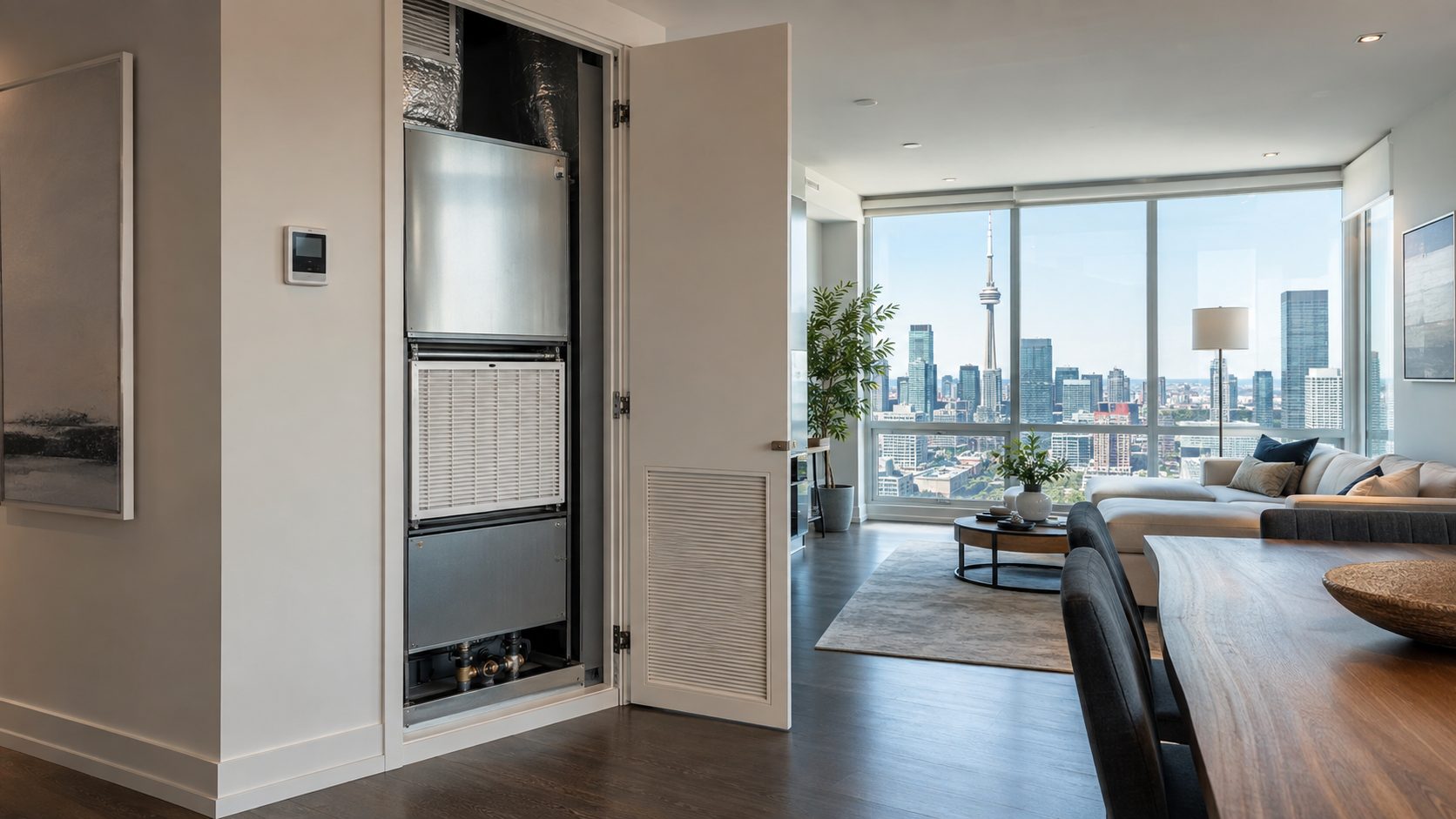
Condo buildings use different arrangements. A suite may have a fan-coil unit connected to a central building system, an in-suite heat pump, packaged equipment, electric baseboards or another setup.
Ask:
- What equipment is physically inside the unit?
- Is heating or cooling included in the condo fee?
- Does the owner pay electricity or another utility separately?
- Is seasonal changeover controlled by the building?
- Who changes filters and performs routine servicing?
- Who pays when the in-suite equipment fails?
Do not assume that because the corporation supplies hot or chilled water, it also pays for every component inside the suite.
Maintenance and Repair Are Not Always the Same
A corporation may have one responsibility while the owner has another. For example, building staff may schedule inspections, while owners remain responsible for filter replacement, coil cleaning or an in-suite component. In another building, the corporation may maintain more of the system and charge costs through common expenses.
The Condo Authority of Ontario explains that repair and maintenance responsibilities depend on the Condominium Act and the corporation’s governing documents. Corporations are generally responsible for common elements and standard-unit elements, but governing documents can affect the allocation. (Condo Authority of Ontario)
This is why a verbal answer from a seller, concierge or another resident should be treated as a starting point—not the final authority.
Review the Documents Before Waiving Conditions
The status-certificate package and governing documents may help clarify:
- the boundary between the unit and common elements;
- the standard-unit definition;
- maintenance and repair obligations;
- required service procedures;
- access rights for building staff or contractors;
- restrictions on replacing thermostats or equipment; and
- whether alterations need written approval.
Have your lawyer review the documents and explain anything that is material to your purchase. If an HVAC concern arises during inspection, obtain advice from a qualified technician familiar with condominium systems.
Look Beyond “It Turns On”
A quick thermostat test does not show the complete condition of a system. Consider asking about:
- age and service history;
- noise, vibration or odour;
- water staining beneath or around the unit;
- clogged condensate drains;
- the last filter or coil cleaning;
- recent leaks affecting this or neighbouring units; and
- planned building-wide replacement programs.
If the condominium has announced an equipment retrofit or replacement, clarify the scope, timing and cost. Determine whether it is funded from operating expenses, the reserve fund, owner payments or another arrangement.
Why This Matters to Your Budget
Two similar condos can carry different owner responsibilities. A building with a higher monthly fee may include more mechanical maintenance. A building with a lower fee may shift certain costs to individual owners. Neither structure is automatically better, but buyers should compare the full ownership cost—not only the monthly fee.
The Bottom Line
When buying a condo, “heating and cooling included” does not necessarily answer who repairs the equipment inside the suite.
Identify the system, read the governing documents, review available maintenance history and understand both routine and major expenses before closing.
Cathy | Real Estate Salesperson
📲 Direct: 647-463-8810
📧 Email: cathy.tse@century21.ca