Facebook
 X
X
 Pinterest
 Copy Link
The Mature Tree Beside the House: Asset, Expense, or Warning Sign?
Many buyers notice the kitchen, flooring and finishes first. Outside, however, one mature tree may deserve as much attention as an entire room renovation.
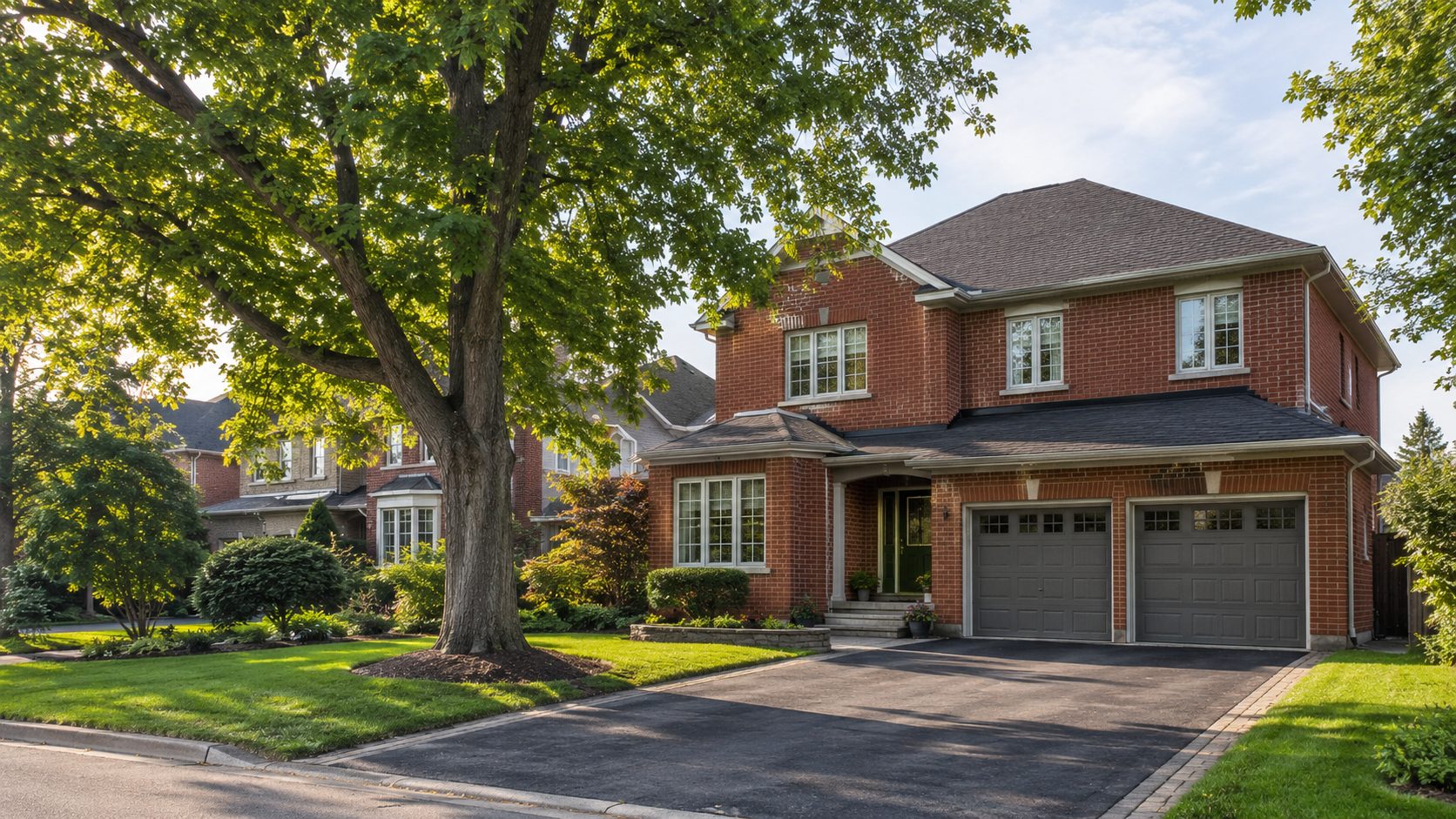
A large, healthy tree can be a genuine asset. It can provide shade, soften the streetscape and give an established neighbourhood the character that newer subdivisions may take decades to develop. But the value of a tree depends on more than its appearance. Its species, health, ownership and position relative to the house all matter.
Start With Location, Not Size
A large tree is not automatically a problem because it stands near a house. The better question is whether its location creates ongoing maintenance or risk.
During a showing, look at whether branches touch or overhang the roof, rub against siding, block a chimney or hang above the driveway. Check the eavestroughs for heavy leaf or seed buildup and look for damaged shingles below the canopy. A tree that shades the roof may help with summer heat, but it can also slow drying after rain and contribute to moss growth in some conditions.
Then look down. Raised driveway sections, uneven walkways and displaced patio stones may indicate root activity. Roots do not always damage a foundation simply because a tree is nearby, but visible movement around hard surfaces is worth investigating.
Consider Light, Drainage and Everyday Use
Trees also affect how a property feels throughout the year. A dense canopy outside a south-facing window may reduce summer heat, but it may also limit winter sunlight. Heavy shade can make it difficult to maintain grass and may leave parts of the yard damp for longer.
Think about how you plan to use the property. A shaded garden may be ideal for one buyer and frustrating for another who wants vegetable beds, a pool or a bright family room.
Pay attention to drainage as well. Soil piled high around a trunk, exposed roots, pooling water or ground that slopes toward the house can point to maintenance issues that deserve a closer look. The tree may not be the cause, but the conditions around it still matter.
Confirm Whose Tree It Is
A tree near the front lot line may belong to the municipality, while a trunk that crosses a property boundary can involve more than one owner. Do not assume that the person selling the home has complete authority to remove or substantially alter it.
In Markham, a permit is generally required before injuring or destroying a private tree with a trunk diameter of 20 centimetres or more, measured 1.37 metres above ground. City-owned trees are handled by the City. Rules and procedures vary by municipality, so buyers should confirm the requirements that apply to the specific property before making renovation or landscaping plans. (City of Markham tree permit guidance)
If the tree’s condition or location raises concern, an arborist can provide a more informed assessment than a visual guess. A home inspector may identify related symptoms, but tree health and structural stability are specialized questions.
The Bottom Line
A mature tree is neither automatically a benefit nor automatically a liability. What matters is whether it is healthy, appropriately located and compatible with the property and your plans.
When comparing homes in Markham or another established GTA neighbourhood, look beyond curb appeal. The tree that makes a property memorable may be one of its best features—but it should still be part of your due diligence.
Cathy | Real Estate Salesperson
📲 Direct: 647-463-8810
📧 Email: cathy.tse@century21.ca